Pasar al contenido principal

User account menu

  • Menú de usuario
  • Translate
      • Select a language:
  • Buscar
  • About
    • Contact us
    • The Team
    • IWRM Explained
    • Voices of the Toolbox
  • Learn
    • IWRM Toolbox
    • Resource Library
    • Learning Opportunities
  • Explore
    • Case studies
    • Country profiles
    • Curator
    • IWRM Survey
    • Platforms Catalogue
  • Connect
    • Water Action Network
    • Communities
    • IWRM HelpDesk
Logo

Próximos eventos

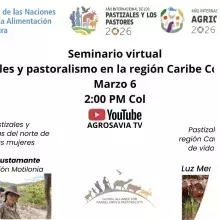
Pastizales y Pastoralismo en la región Caribe Colombiana
6 Mar '26 15:00 - 16:00 (CET)
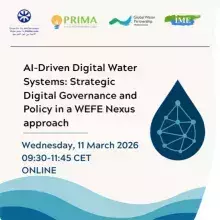
Webinar on AI-Driven Digital Water Systems: Strategic Digital Governance and Policy in a WEFE Nexus approach
11 Mar '26 09:30 - 11:45 (CET)
All Próximos eventos

Newest opportunities

¿Cuál crees que es el mayor desafío para reducir el riesgo de sequía en su región?
Saida Rivero · 4 Mar
Discussion
¿Cuál crees que es el mayor desafío para reducir el riesgo de sequía en su región?
Saida Rivero · 4 Mar
Discussion
All opportunities

Communities

GCF Montenegro Water & Climate Knowledge Hub
Closed group Standard community · 25 miembros
DANIDA Water Fellow Community
Danida Fellows Water Community
Closed group Standard community · 21 miembros
All communities

Newest members

Festus Amashile
Hydrologist
,
Ministry of Agriculture water and land Reform
maurizio righetti
eng
,
Free university of Bozen
Todos los miembros
  • Suyu Liu posted in Asia Community

    Hace 1 hour Visibilidad Público

    A roadmap and tools for water-energy-food nexus security in South Asia

    On 3 March 2026, by Alok Sikka, Bunyod Holmatov, Claudia Ringler, Mohsin Hafeez

    The link to this piece is here: https://www.iwmi.org/blogs/a-roadmap-and-tools-for-water-energy-food-ne…

    Perhaps no other region in the world faces such a stark combination of enormous potential and profound challenges as South Asia does. Its rapid economic growth, swift urbanization and growing populations are met head-on with acute environmental concerns and resource constraints.

    Although South Asia is home to a quarter of the world’s population, it holds less than 5% of global freshwater resources. The water supply-demand gap is considerable; South Asian economies are highly reliant on hydropower, while their agricultural systems account for a third of all global groundwater pumping. The interconnectedness of water, energy and food security is especially pronounced in the region, where many critical river basins flow across national borders and climate vulnerability is acute.

    A systems or nexus approach, which considers the interconnections between water, energy, food and environmental (WEFE) systems, has great potential, but can become paralyzing for decision-makers if not supported with capacity building and a clear operational plan. Historically, progress on creating secure WEFE systems has been hampered by a siloed focus. As a result, policies designed to solve one problem have inadvertently created another. For example, in Pakistan, as estimated 12 billion cubic meters of water are not optimally used, flowing to thirsty crops like rice and sugarcane, which generate relatively low economic returns for the high volume of water they consume.

    So, how do we move from the theory of a nexus systems approach to its practical application? Outputs from the Water-Energy-Food-Environment (WEFE) Nexus Policy work of the CGIAR Policy Innovations Program provided a strategic regional roadmap to make a systems-based nexus approach an operational reality in South Asia.

    A WEFE roadmap for a complex region
    The starting point is a clear-eyed view of the on-the-ground challenges. Interestingly, the primary barriers to progress are often institutional rather than technical. Through extensive stakeholder consultations, the International Water Management Institute (IWMI) identified six key challenges to operationalizing a nexus approach in South Asia. These include fragmented governance and institutional silos, competing priorities and policy trade-offs, data and information gaps, financial constraints, limited private sector engagement, and inefficient regional cooperation and transboundary challenges.

    To overcome these challenges, experts from IWMI and the Asia Disaster Preparedness Centre (ADPC) proposed a strategic roadmap for the region, focusing on actions such as promoting cross-sectoral collaboration, strengthening data collection and enhancing international cooperation for shared water resources. While these directives apply to the whole region, experts emphasize that implementation must be context specific. For instance, sustainable hydropower and watershed conservation are priorities for upstream nations like Bhutan and Nepal. In contrast, for India and Pakistan, the priority shifts to managing the energy-groundwater nexus to prevent aquifer depletion. Meanwhile, for Bangladesh and Sri Lanka, the focus is heavily tilted toward climate resilience, managing salinity intrusion, and pollution control in deltaic and coastal systems.

    Practical tools to measure success
    A high-level roadmap, however, requires practical tools to guide specific decisions and measure progress. This is where decision support systems (DSS), including those developed by IWMI research teams, come into play. These analytics platforms provide policymakers with information dashboards on the competing demands on agriculture and water resources and the overall impact of policy decisions on the WEFE nexus.

    A key feature of IWMI’s newly-developed Water-Energy-Food (WEF)-Nexus DSS is the ability to generate the WEF Nexus Index; a composite scorecard that measures the combined health of interconnected systems. This involves combining availability and productivity indicators for the trio of water, energy and food into a single, normalized score: the WEF Trade-off Index (WEFTI). Crucially, it allows policymakers to quickly see if a chosen policy is a net positive or negative for the system as a whole.

    Mapping the potential for nexus gains: These maps generated by the WEF-Nexus DSS illustrate the Water-Energy-Food-Environment Trade-off Index under a business-as-usual scenario compared to a 20% increase in irrigation efficiency. Graphic: IWMI
    Mapping the potential for nexus gains: These maps generated by the WEF-Nexus DSS illustrate the Water-Energy-Food-Environment Trade-off Index under a business-as-usual scenario compared to a 20% increase in irrigation efficiency. Graphic: IWMI
    Other complementary tools like the Water Productivity Atlas models specific scenarios at the district and basin level. For example, a scenario presented for Haryana district in India, modelled a shift away from thirsty crops like rice and sugarcane, towards more diverse and nutritious crops like millets and vegetables. The Water Productivity Atlas showed clear, measurable gains. The groundwater footprint was reduced, total energy consumption fell by 13% and economic water productivity nearly doubled. The WEF-Nexus DSS then synthesized this data, and the resulting visual ‘radar charts’ showed a dramatic improvement in the overall WEFTI score, providing a clear, evidence-based case for this crop diversification strategy.

    Crop diversification scenarios: The radar charts from the WEF-Nexus DSS show the nexus benefits of replacing 50% of water-intensive crops with diverse alternatives. They compare two land allocation methods: dividing the land equally (EQ) versus weighting it by Economic Water Productivity (EWP). The visual demonstrates that EWP-weighted allocation yields significantly higher nexus gains, highlighting the value of data-driven crop diversification. Graphic: IWMI
    Crop diversification scenarios: The radar charts from the WEF-Nexus DSS show the nexus benefits of replacing 50% of water-intensive crops with diverse alternatives. They compare two land allocation methods: dividing the land equally (EQ) versus weighting it by Economic Water Productivity (EWP). The visual demonstrates that EWP-weighted allocation yields significantly higher nexus gains, highlighting the value of data-driven crop diversification. Graphic: IWMI
    Turning tools into tangible impact
    These tools and roadmaps are crucial, but making them work in the real world requires a focus on implementation. The adoption of new, integrated approaches is often driven by policymakers feeling a ‘pain point,’ such as dwindling financial resources, which pushes them to seek more efficient solutions.

    For the way forward, several key considerations emerge. First is the need to document and share ‘stories of success’ to prove the value of these tools and build momentum for their adoption. Second, in the complex political reality of South Asia, creating smart incentives for stakeholders is often more effective than top-down legislation. Finally, success requires institutional champions and collaborative structures, like inter-ministerial committees, to break down silos.

    By combining a strategic regional roadmap with practical analytical tools and a clear focus on real-world implementation, the aspiration of a systems approach can be turned into a confident reality.

    Alok Sikka was the country representative for India and Bangladesh at IWMI, Bunyod Holmatov is the research group leader for WEFE Nexus at IWMI, Claudia Ringler is the co-lead for WEFE Nexus Policy at CGIAR Policy Innovations Program, and director of Natural Resources and Resilience at the International Food Policy Research Institute (IFPRI), and Mohsin Hafeez is the WEFE Nexus Policy lead and strategic program director for Water, Food and Ecosystems at IWMI.

    Total amount of likes
    0 likes
    Dislike 0
  • Doctora en Ciencias Gerenciales. Doctora en Ecología del Desarrollo Humano  Investigador postdoctoral.l

    Saida Rivero created new community content in Global Community

    Hace 7 hours
    Discussion

    ¿Cuál crees que es el mayor desafío para reducir el riesgo de sequía en su región?

    Creado en
    4 Mar 2026 •
    por
    Saida Rivero
    0
    0
    Lee más sobre ¿Cuál crees que es el mayor desafío para reducir el riesgo de sequía en su región?
  • Doctora en Ciencias Gerenciales. Doctora en Ecología del Desarrollo Humano  Investigador postdoctoral.l

    Saida Rivero created new community content in Latin America and the Caribbean Community

    Hace 8 hours
    Discussion

    ¿Cuál crees que es el mayor desafío para reducir el riesgo de sequía en su región?

    Creado en
    4 Mar 2026 •
    por
    Saida Rivero
    0
    0
    Lee más sobre ¿Cuál crees que es el mayor desafío para reducir el riesgo de sequía en su región?
  • Vangelis Constantianos

    Vangelis Constantianos created an event in WEFE4MED Knowledge Hub

    Hace 11 hours
    Evento

    3rd Regional Roundtable on Digital Transformation for Advancing WEFE Nexus in the Mediterranean Source to Sea Continuum | Final Event of the PRIMA ACQUAOUNT Project

    Event date 23 Mar '26 - 24 Mar '26
    The event will take place at the
    A.Rome Hotel & ONLINE (Hybrid)
    This event has type Workshop/Seminar
    Lee más sobre 3rd Regional Roundtable on Digital Transformation for Advancing WEFE Nexus in the Mediterranean Source to Sea Continuum | Final Event of the PRIMA ACQUAOUNT Project
  • Suyu Liu created new community content in Global Community

    Hace 1 day
    Opportunity

    Senior Gender mainstreaming and policy consultant

    Creado en
    3 Mar 2026 •
    por
    Suyu Liu
    1
    0
    Lee más sobre Senior Gender mainstreaming and policy consultant
  • Doctora en Ciencias Gerenciales. Doctora en Ecología del Desarrollo Humano  Investigador postdoctoral.l

    Saida Rivero created new community content in Global Community

    Hace 1 day
    Blog

    Parte 2.ª- La Huella de la Sed: Tendencias espaciales y métricas de la degradación por sequía

    Creado en
    3 Mar 2026 •
    por
    Saida Rivero
    1
    0
    Lee más sobre Parte 2.ª- La Huella de la Sed: Tendencias espaciales y métricas de la degradación por sequía
  • Doctora en Ciencias Gerenciales. Doctora en Ecología del Desarrollo Humano  Investigador postdoctoral.l

    Saida Rivero created new community content in Latin America and the Caribbean Community

    Hace 1 day
    Blog

    Parte 2.ª- La Huella de la Sed: Tendencias espaciales y métricas de la degradación por sequía

    Creado en
    3 Mar 2026 •
    por
    Saida Rivero
    0
    0
    Lee más sobre Parte 2.ª- La Huella de la Sed: Tendencias espaciales y métricas de la degradación por sequía
  • Vangelis Constantianos

    Vangelis Constantianos created an event in WEFE4MED Knowledge Hub

    Hace 1 day
    Evento

    Webinar on AI-Driven Digital Water Systems: Strategic Digital Governance and Policy in a WEFE Nexus approach

    Event date 11 Mar '26 09:30 - 11:45 (CET)
    The event will take place at the
    Online
    This event has type Webinar
    Lee más sobre Webinar on AI-Driven Digital Water Systems: Strategic Digital Governance and Policy in a WEFE Nexus approach
  • Doctora en Ciencias Gerenciales. Doctora en Ecología del Desarrollo Humano  Investigador postdoctoral.l

    Saida Rivero created an event in Latin America and the Caribbean Community

    Hace 4 days
    Evento

    Consultas de los pueblos indígenas de la CLD

    Event date 3 Mar '26 - 4 Mar '26
    This event has type Other
    Lee más sobre Consultas de los pueblos indígenas de la CLD
  • Doctora en Ciencias Gerenciales. Doctora en Ecología del Desarrollo Humano  Investigador postdoctoral.l

    Saida Rivero created an event in Global Community

    Hace 4 days
    Evento

    Consultas de los pueblos indígenas de la CLD

    Event date 3 Mar '26 - 4 Mar '26
    This event has type Other
    Lee más sobre Consultas de los pueblos indígenas de la CLD
  • Doctora en Ciencias Gerenciales. Doctora en Ecología del Desarrollo Humano  Investigador postdoctoral.l

    Saida Rivero created a new resource in Latin America and the Caribbean Community.

    Hace 6 days
    Resource

    FRUTAS SUBUTILIZADAS EN EL MARCO DEL CAMBIO CLIMÁTICO: UNA ESTRATEGIA DE RESILIENCIA PARA VENEZUELA

  • Alexander Borg created a new resource in WEFE4MED Knowledge Hub.

    Hace 1 week
    Resource

    WEFE4MED Policy Brief No. 3 - WEFE Nexus for Supporting the Achievement of the UN SDGs in the Mediterranean Basin

  • Alexander Borg created a new resource in WEFE4MED Knowledge Hub.

    Hace 1 week
    Resource

    WEFE4MED Policy Brief No. 2 - Mainstreaming the WEFE Nexus in Water Management Planning under Scarcity Conditions

  • Doctora en Ciencias Gerenciales. Doctora en Ecología del Desarrollo Humano  Investigador postdoctoral.l

    Saida Rivero created an event in Latin America and the Caribbean Community

    Hace 1 week
    Evento

    Pastizales y Pastoralismo en la región Caribe Colombiana

    Event date 6 Mar '26 15:00 - 16:00 (CET)
    This event has type Webinar
    Lee más sobre Pastizales y Pastoralismo en la región Caribe Colombiana
  • Alexander Borg created a new resource in WEFE4MED Knowledge Hub.

    Hace 1 week
    Resource

    WEFE4MED Policy Brief No. 1 - Applying the WEFE Nexus for Water Resilience

  • Menna Ghonaim created a new resource in WEFE4MED Knowledge Hub.

    Hace 1 week
    Resource

    The Samla Nexus: A Community-Powered WEFE Project - Demo Presentation

  • Menna Ghonaim created a new resource in WEFE4MED Knowledge Hub.

    Hace 1 week
    Resource

    Taroudant Nexus: Solar Desalination and Argan Agroforestry for Climate-Resilient Agriculture - Demo Presentation

  • Menna Ghonaim created a new resource in WEFE4MED Knowledge Hub.

    Hace 1 week
    Resource

    Chadwick Lakes Trail: Ecological Rehabilitation of Wied il-Qlejgħa - Demo Presentation

  • Menna Ghonaim created a new resource in WEFE4MED Knowledge Hub.

    Hace 1 week
    Resource

    Community-Led Agroforestry for Water Conservation and Climate Resilience in Morocco’s Atlas Region - Demo Presentation

  • Bahaa Janbein posted in WEFE4MED Knowledge Hub

    Hace 1 week Visibilidad Público

    Hello, I'm new here. I hope you are all doing well and enjoying your days. would love to connect with evereyone here

    Total amount of likes
    4 likes
    Dislike 0
  • Paginación

    • Older items
Global Water Partnership

Footer

About
Contact us
Copyright Information
IWRM Glossary
Privacy Policy
Terms of use
Learn
Resource Library
Learning Opportunities
IWRM Tools
Explore
Case studies
Country profiles
Curator
IWRM Survey
Platforms Catalogue
Connect
Communities
Water Action Network
IWRM HelpDesk
© 2026 Global Water Partnership